
blog
Shared Memory Is Not Universal, Even For Games
September 28, 2026
The story of mainline video game history is one we've all heard by now. The Atari 2600 founded the idea of video games at homes across the world, the market crashed in 1983 because Atari had no quality control, then Nintendo became the savior of gaming by introducing the NES, arcades slowly fizzled out while games at home became more advanced. However, if you live outside of America, much of that story either happened very differently, or didn't happen at all.

For Japan, the story that American gamers often tout as canon is puzzling because their milestones were remarkably different, and many things that happened in America simply didn't happen in Japan. Atari was largely only successful in America. In Europe, despite the games being awful and making me question British design, the ZX Spectrum reigned supreme. In Japan, gaming at home was largely ignored in favor of the arcades until Nintendo released the Famicom. And the story of the arcades is one of two radically different memories.
America remembers the arcades of the early 80's lovingly, it was the age of Pac-Man fever. Pac-Man was so successful that it became a pop culture phenom, leading to Atari's botched but best-selling home port, as well as breakfast cereal, chart-topping songs, and the characters' visage becoming synonymous with the medium itself. In Japan, Pac-Man was successful, but it didn't occupy quite the same cultural position; Namco's Galaxian was itself an enormous hit and an important step toward Galaga. Even something as seemingly universal as the history of Namco's arcade games looks different depending on which country you're standing in.
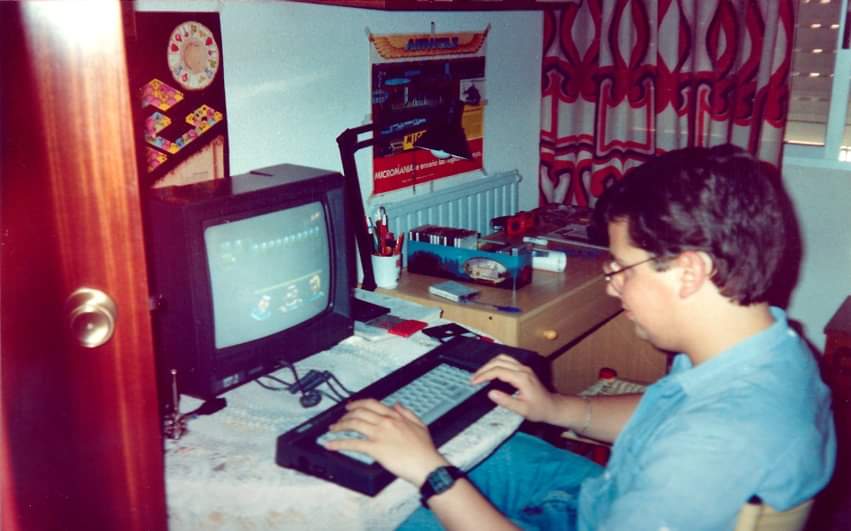
In 1983, America experienced the video game market crash, caused by the proliferation of low-quality games being produced and published by Atari, leading to consumers becoming disillusioned with video games, eulogizing them as a children's toy fad that got too cocksure of itself as they watched Atari bury their cartridges in landfills. This event did not meaningfully occur in Europe or Japan, where Atari had very little footprint at all in the market. To contrast, Japan and Europe were rapidly developing their own home-computer cultures. Japan saw the MSX, PC-88 and PC-98, and the Sharp X1 all becoming places to play games at home. In Europe, gaming culture predominantly occurred through the Commodore 64, Amstrad CPC, BBC Micro, and later the Amiga and Atari ST computers; in fact, most gaming in Europe occurred on the computer up until the Super Nintendo's hey-day. All the while, Nintendo released the Famicom to Japan that same year as the American crash, quickly finding success by establishing a large lineup of software that included ports for many of their previously released arcade titles.
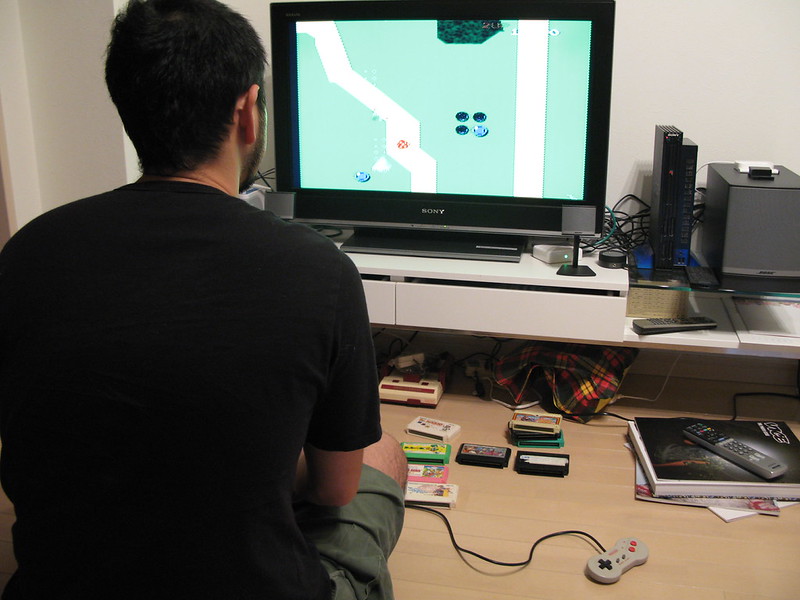
Namco wasn't finished with the arcades. Their big move in 1983 was the release of Xevious. American audiences may be acquainted with Xevious, but most would probably see it as an unremarkable primitive scrolling shooter. For Japan, the success and importance of Xevious could not be understated; it's a story that somewhat mirrors Pac-Man's cultural presence in America. While Xevious was immensely popular in the Japanese arcade, it wasn't until the Famicom version was released that it truly became something inescapable, synonymous with video games. Xevious would become one of the foundational reasons for the survival of the shoot-em-up genre well into the modern age, a genre that by the 90's was becoming seen more as primitive and outdated to American audiences until eventually becoming niche and obscure. By contrast, the simple and frenetic appeal of a well-made shmup endures in Japan even in 2026. If you haven't really given Xevious much of a try, I highly recommend it, it still holds up as a supremely fun afternoon.
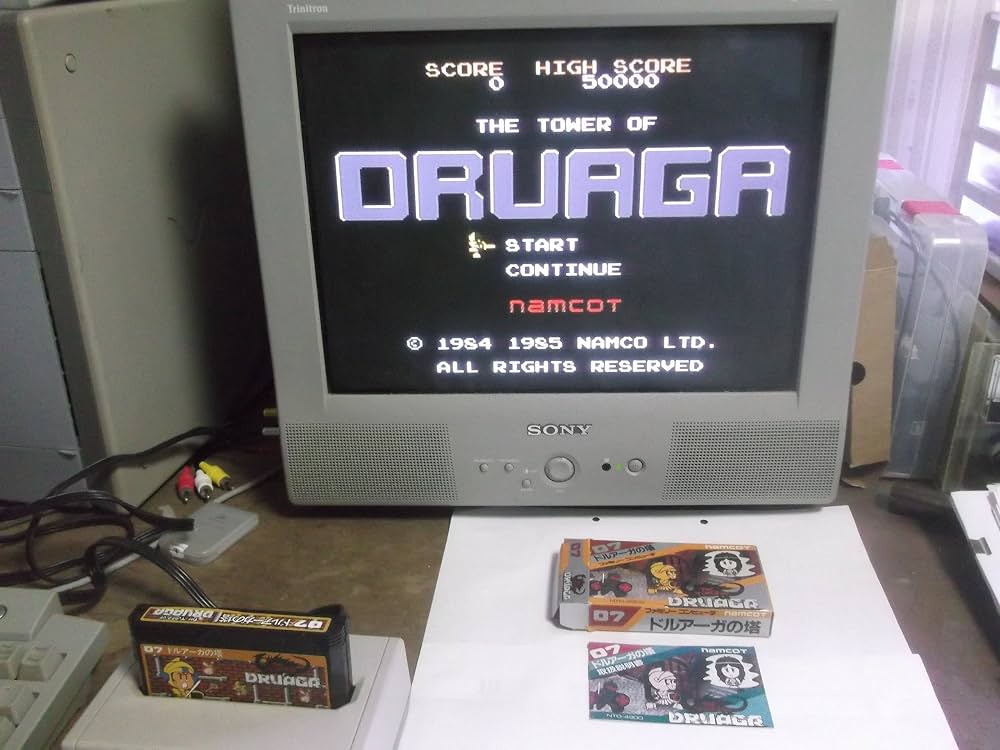
By the time that the Famicom reached America in the form of the NES, it was already 1985. Many of the NES titles during the first few years of its launch have attained this tremendous legendary status, becoming the biggest, most celebrated and most well-known game franchises that still continue today. Nintendo's second best-known franchise, The Legend of Zelda, is often touted by American audiences for pioneering the concept of secrets becoming a core part of gameplay. However, Zelda did not invent this idea, it iterated upon it from a game called The Tower of Druaga. Only released in Japan, Druaga is an action game built around secrets. It saw the player exploring maze-like dungeons and uncovering items with obscured use-cases in order to save an imperiled princess from the big bad and recover a legendary item. The success and influence of Druaga was immense and its reverberations are responsible in part for helping to shape The Legend of Zelda. Unlike Xevious, though, The Tower of Druaga does not hold up nearly as well today. If you were to pick it up without knowing its importance, you might even consider it a bad game. Keep in mind that when Druaga debuted at the arcades, there was nothing else like it. It was developing concepts that had never even been tried. People were slowly learning more and more about the game as people talked to eachother and shared tips and information on its secrets. Before walkthroughs, wikis and YouTube videos, the community itself became part of the game's information system. Druaga's design philosophy directly relied on word-of-mouth discovery and it was a resounding hit. Nintendo borrowed that same design language from Druaga and refined it for a global audience.

Aside from Galaxian, Xevious and The Tower of Druaga, there's a franchise that American gamers are certainly familiar with but may not realize became an absolute cultural spectacle in Japan and remains one today: Dragon Quest. In America, we saw the release of Final Fantasy VII in 1997 as something bigger than the medium that shook the industry and reshaped expectations of what role-playing games could be, what kind of stories a game could tell. In Japan, Final Fantasy, while successful, would be nowhere near as popular or consequential as its competitor that came before it: Dragon Quest. Particularly, the year 1988 saw the release of Dragon Quest III, a game whose release, reception, legacy and cultural impact has never truly been mirrored in America or Europe. If you want to understand the scale of Dragon Quest III, imagine the cultural anticipation of Grand Theft Auto VI, the franchise importance of a new Mario or Pokémon game, and the industry-wide impact that Final Fantasy VII had when it arrived in the West, all concentrated into a single release. Within just the first day of its release, it sold over one million copies domestically. It caused hundreds of schoolboys to be arrested for truancy, and led to Enix only releasing further installments of the series on the weekends to prevent this from occurring again. The series' mascot, the Slime, became a celebrated cultural icon of Japan by association. By the time it released in America, critics who had already adopted 16-bit console hardware were quick to dismiss the retitled Dragon Warrior III as primitive and archaic. Its sales in the United States were tepid as a result. Over the years, after American critics and historians had ample time to take notice of the Japanese reaction to Dragon Quest III, it has seen a more positive reappraisal, affirming its innovations, pacing and strong story.
All being said, the reappraisal of Dragon Quest III in the West is a good thing. But it doesn't retroactively make it part of America's cultural memory. America has its own story. It decides which games mattered most to its audiences, which games introduced them to ingenious innovations and ideas, and which games became important to them. Japan has its own story. Europe has its own story. The rest of the world does too. None of these histories is inherently more legitimate than the others. They are simply different histories, shaped by different markets, different hardware, different games, and different experiences with the medium. Each market's tastes are in some way defined by what portion of a design lineage they were exposed to. And I think those differences are worth acknowledging. Because when we talk about the history of video games as though there were one universal story, we're inevitably leaving somebody's history out.
about
A blog where I write about video games and things that pique my interest. I don't update it as much as I should.
webring


